In the 1970s, Ricardo Fasanello worked with innovative materials like polyester resin and fiberglass, mixing them with leather, steel and iron. The “Esfera” captures the mood of the space-age in both material and form: a spherical fiberglass structure with an upholstered seat and back. Fasanello’s large-scale, sculptural pieces draw on the influence of pop culture and are marked by a formal, constructive reasoning.
- Structure base made of fiberglass in four different finishes
- Upholstery offered in a variety of leathers, COL
- Made to order

Designed in 1979, and presented in an exhibition at Bahia's Museum of Modern Art, this chair, whose name fittingly translates to star from Portuguese, quickly received international recognition, receiving awards like the II Prêmio Museu da Casa Brasileira, in 1987. Furthermore, at the chair's top center, is a carved star. The chair's distinguished comfort is generated by the anatomical shape of its seat, and flexible backrest, made of peanut wood strips.
- Base structure made of cumaru FSC certified wood
- Available with or without arm
- Part of the Etel collection
- Made to order

Fasanello's first creation, the "Fardos" sofa consists of three large rolls of foam, held together by straps. The piece was presented in furniture exhibitions in Paris and Berlin in 1971. Available in leather and iron. Produced by the Ricardo Fasanello studio, in Brazil.

Fasanello´s first creation, the "Fardos" lounge chair consists of three large rolls of foam, held together by straps. The piece was presented in furniture exhibitions in Paris and Berlin in 1971. Produced by the Ricardo Fasanello Atelier, in Brazil.

Minimal and sleek, the Feixe sideboard is defined by the horizontal board with rounded grooves in its middle, framed by three smooth planes of wood.
- Base structure made of a variety of native Brazilian woods
- Part of the Etel collection
- Made to order
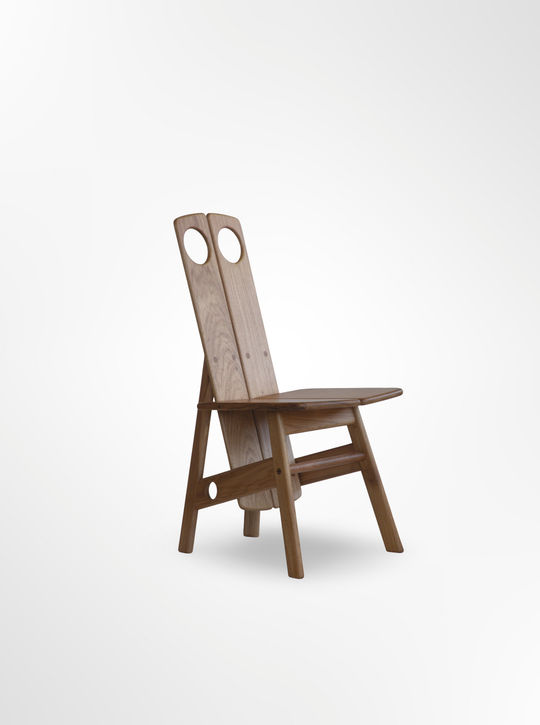
Named after Rodrigues' nephew and disciple, the 'Fernando' armchair was one of the last pieces Rodrigues designed in his lifetime. It conjures designs from his past through his signature circle cut-outs and innovative form.
The Fernando chair was born from a dormant project, a roll of scratch paper among hundreds of other creations by Sergio Rodrigues, which was found by Fernando Mendes when he was looking for another design for which to make a prototype.
In homage to the “discoverer” of this never before produced design, Sergio named the chair Fernando.
- Base structure available in natural or stained freijó wood
- Made to order

A modern take on a Parsons table, the delicate Fina dining table offers clean, geometric lines in a sophisticated and functional design. Option of a Morandi-inspired centerpiece.
- Part of the Etel collection
- Made to order
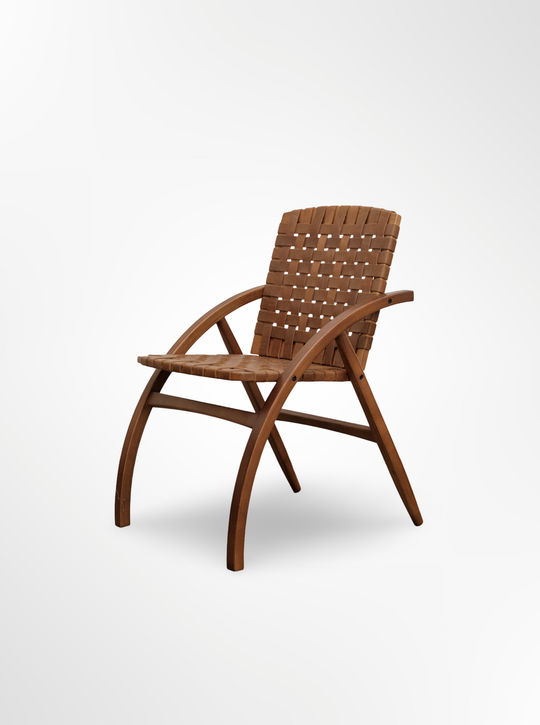
The Flexa collection offers comfort, flexibility and charm, through simple designs that respect the natural environment. The arms and front legs are composed of a continuous wooden arch; the seat and back are available in woven leather strap or cane. These elements are secured by the back legs, referred to as 'Flexa' in technical drawings.
- Base structure in Beech Wood
- Seat and Back in woven leather strap or cane
- Made to order
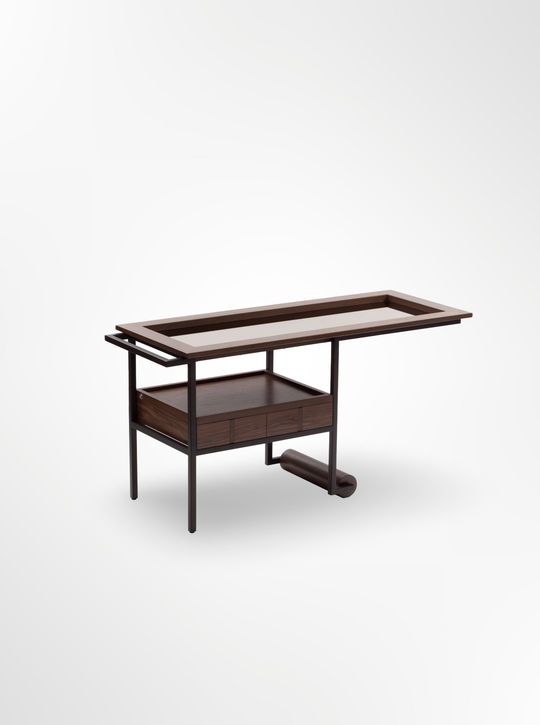
Constructed with a dramatic cantilevered top and a solid wood roller for ease of movement, this bar cart pays homage to early stone age cart designs.
- Base structure: steel and glass
- Wood options: freijo, imbuia
- Part of the Etel collection
- Made to order

Passionate about the organic lines and simplicity found in nature, Etel Carmona was inspired by the intersection of branches on a tree that carries the name Forquilha, while creating this dining table.
- Base structure made of imbuia or freijó wood
- Part of the Etel collection
- Made to order
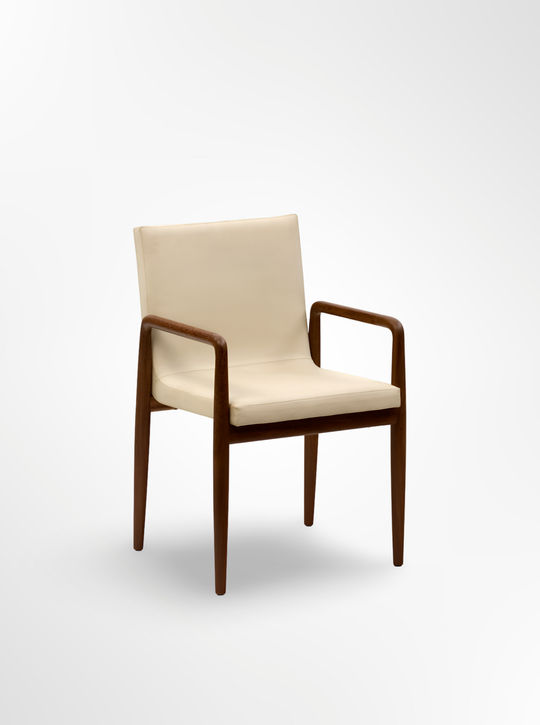
The Francisco dining chair possesses an atemporal quality; its most defining attribute is its slightly rounded arms which delineate the piece and become legs.
- Available in a variety of woods
- fabric or leather options
- Part of the Etel collection
- Made to order
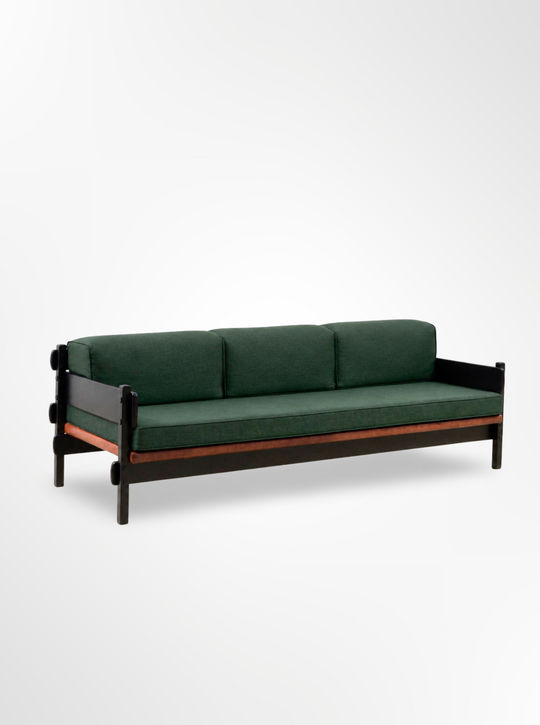
Simple and elegant, the "Franco" sofa designed by Sergio Rodrigues is comprised of cross beams in native Brazilian hardwood.
- Base structure available in natural or stained freijó wood
- Upholstery offered in a variety of fabrics and COM
- Made to order
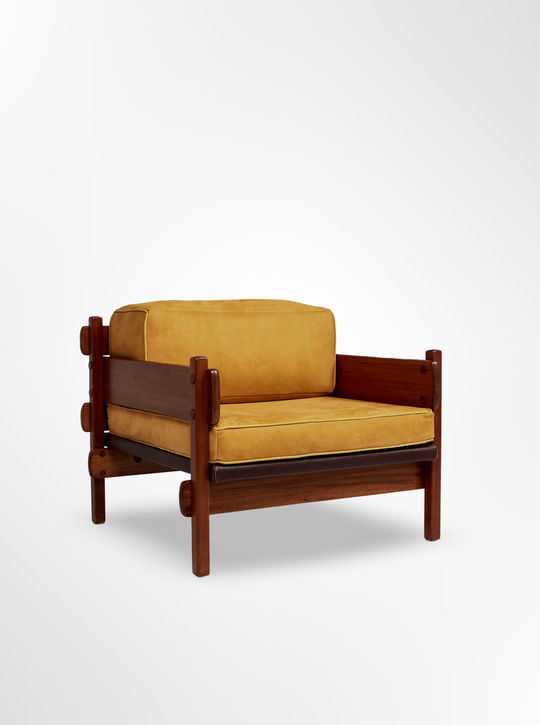
- Base structure available in natural or stained freijó wood
- Upholstery offered in a variety of fabrics and leathers
- Made to order

The Frei Egídio Chair was developed by Lina Bo Bardi, Marcelo Ferraz, and Marcelo Suzuki to furnish the Gregório de Mattos Theater in Salvador, Bahia. The chair was conceived to be lightweight and easily transportable. To achieve this, the designers took inspiration from the folding chairs of the Italian Renaissance, which the team regularly used while working at the Glass House (Casa de Vidro).
Seeking to modernize the traditional design, the multiple slats of the classical model were distilled into three rows of wooden boards. The selection of wood, joinery, and hardware was entrusted to Ferraz and Suzuki, who developed the design and fabrication process simultaneously, ultimately arriving at the chair as we know it today.
The chair's name was chosen by Lina Bo Bardi as a tribute to Friar Egídio, who had invited her to design the Church of the Holy Spirit of the Cerrado (Igreja do Espírito Santo do Cerrado) in Uberlândia during the previous decade.

The Fresta dining table features a base composed of superimposed frames, achieving a piece that is simultaneously airy and substantial.
- Base structure made of a variety of native Brazilian woods
- Part of the Etel collection
- Made to order
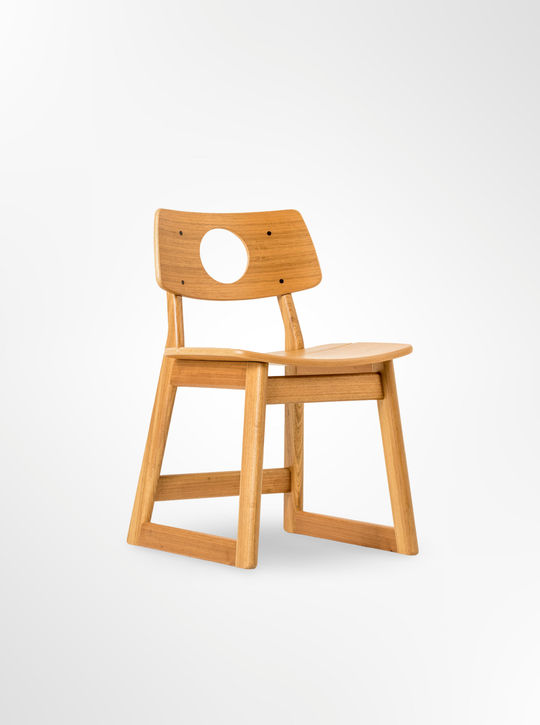
The intense research work carried out at the Sergio Rodrigues Institute to organize the master's documents revealed the discovery of the Gaia chair original drawings. The name is an homage to his granddaughter Gaia Rodrigues Ferreira Gomes.
-Made with natural or stained freijó wood
-Made to Order

"Gaivota" revolving armchair exhibits a U-shaped upholstered seat. Named after a seagull, the piece is bold and appears to be floating in the air. Fasanello´s large-scale, sculptural pieces draw on the influence of pop culture and are marked by a formal, constructivist reasoning.
• Base structure made of painted metal
• Upholstery offered in a variety of leathers and suede COL
• Made to order
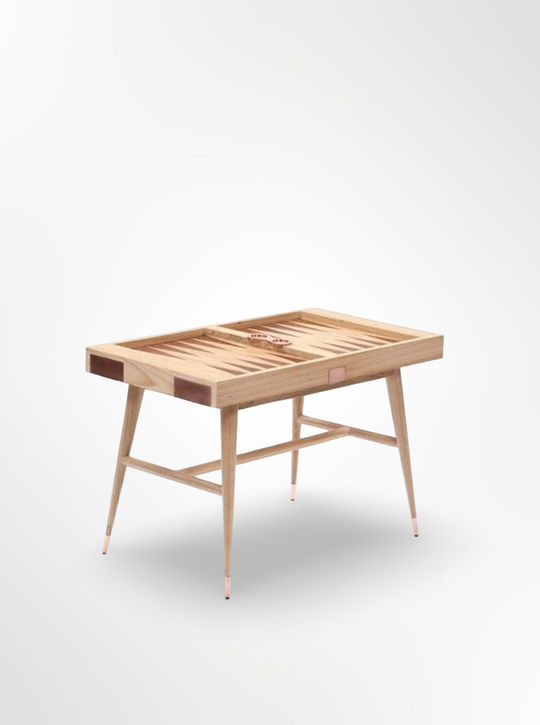
A Brazilian design made to entertain, the Gamão table, named after the Portuguese word for backgammon, is fit for a game. The table is distinguished by the variety of traditional Brazilian woods intertwined on its upper surface, and sleek, elegant, copper details in the appliqué and draught holders.
- Base: variety of woods
- Top surface: variety of woods
- Finishes: cooper
- Part of the Etel collection
- Made to order
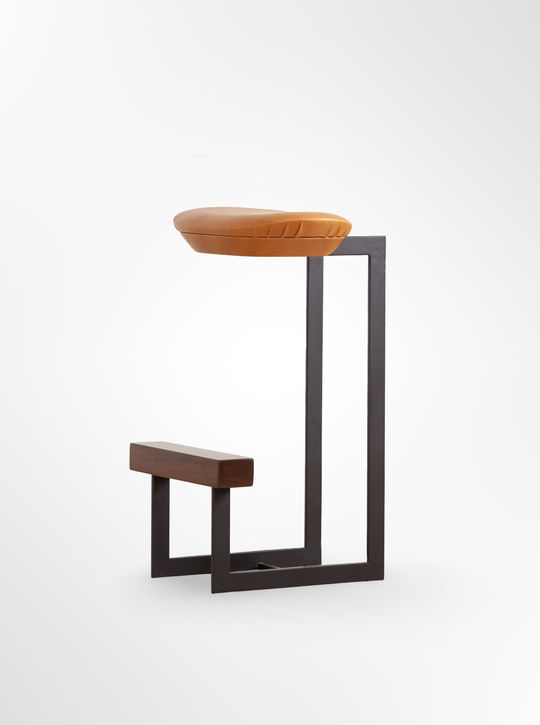
Designed in the 1960's by Jorge Zalszupin, the austere Gavea bar stool is comprised of a rigid metal base, cushioned upholstered seat and wooden foot rest. The minimal and ingenious design illustrates Zalszupin's sophistication.
- Foot rest made of a variety of native Brazilian woods
- Upholstery offered in a variety of fabric, leather, COM/COL
- Reissued by Etel
- Made to order
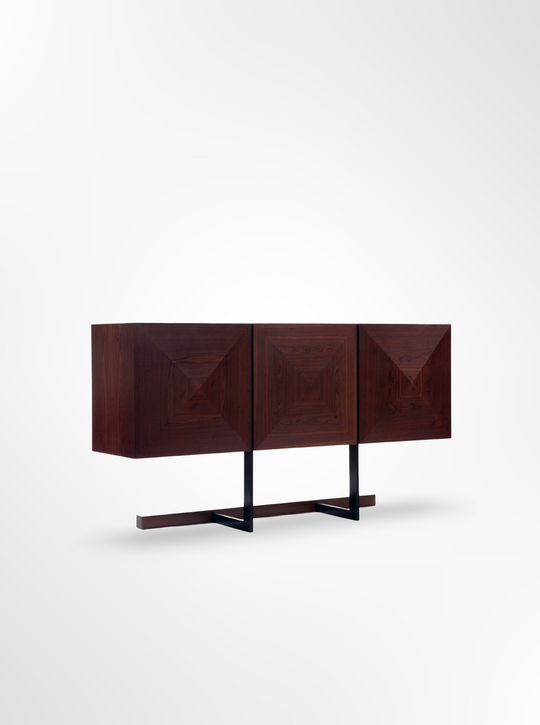
Recently re-editioned, this mid-century design is characterized by its angular shapes; a rectangular wooden structure is held by squared iron legs with paralleling wooden detail. Opened with Zalszupin’s signature handles, the bar’s mirrored interior is revealed.

A creation named after the stylist and friend of Fernando, Gilda Midani. A sturdy bench with fluid
lines that offer comfort and ergonomics – the key point of the project.
The seat, with organic curves, is hand-modeled from a block of freijó wood. For the lower crossbar, Fernando added a footrest, providing more stability when sitting.
The piece can have variable heights, ranging from 60cm to 75cm. It is ideal for supporting kitchen and bar counters.

The Gio Lounge Armchair was named after Gio Ponti, Italian architect and editor of Domus, who selected and published some pieces by Sergio Rodrigues for the respected Italian magazine in 1959.
This piece was the first Sergio designed with this type of upholstery, in which seat and back are a single piece. On the sides of the armchair there are two pegs that can be removed to adjust the inclination of shell in three different positions, to sit formally or more relaxed. To allow for sitting cross-legged, the armchair has very low armrests. The intention of this piece was for a younger audience, who would use furniture more informally, or for meditation. The Gio armchair is one of the classics designed in the first decade of creations of Sergio Rodrigues and continues today as contemporary and youthful as at that time.
- Base structure available in natural or stained freijó wood
- Upholstery offered in a variety of fabrics, leather, COM/COL
- Optional matching ottoman
- Headrest pillow included
- Chair can be adjusted to three different positions
- Made to order
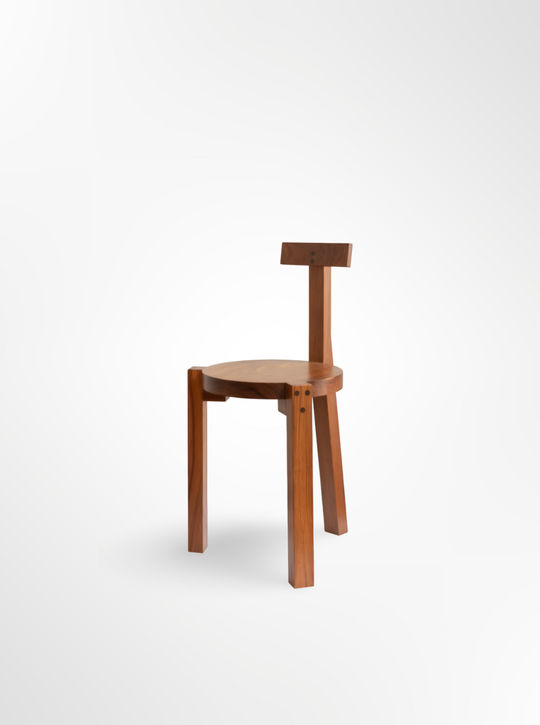
The Girafa Chair emerged from the collaboration between Lina Bo Bardi, Marcelo Ferraz, and Marcelo Suzuki in the late 1980s, as part of the design project for the restaurant at the Casa do Benin in Salvador, Bahia. Introduced in 1986, the chair marked the beginning of the Girafa line, from which other typologies were later developed, forming a family of related pieces. For this special 2025 edition, a numbered series was produced in Grumixama wood.
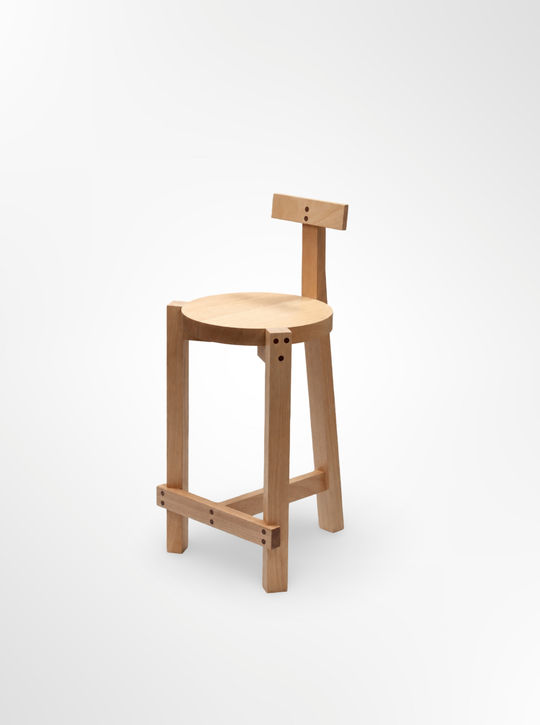
The Girafa collection is the result of a collaboration between Lina Bo Bardi, Marcelo Ferraz, and Marcelo Suzuki in the late 1980s, within the context of the design project for the restaurant at Casa do Benin in Salvador, Bahia. The Girafa Chair launched the collection in 1986, inspiring other furniture typologies that would become part of the same family. Among them is the Girafa Stool, designed for counters and taller tables and available in two heights.