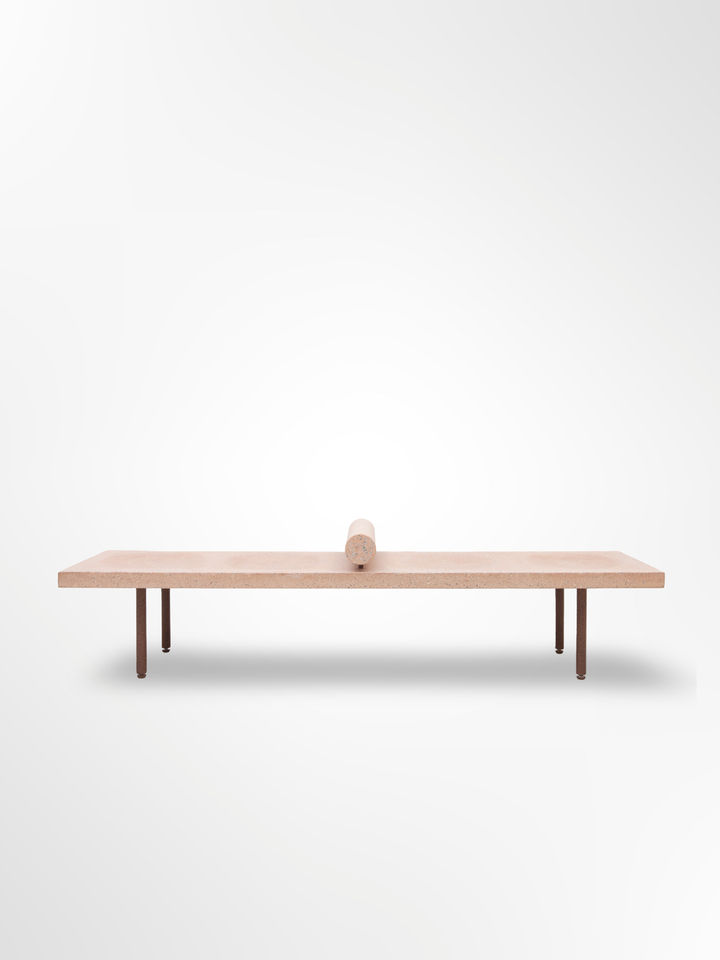
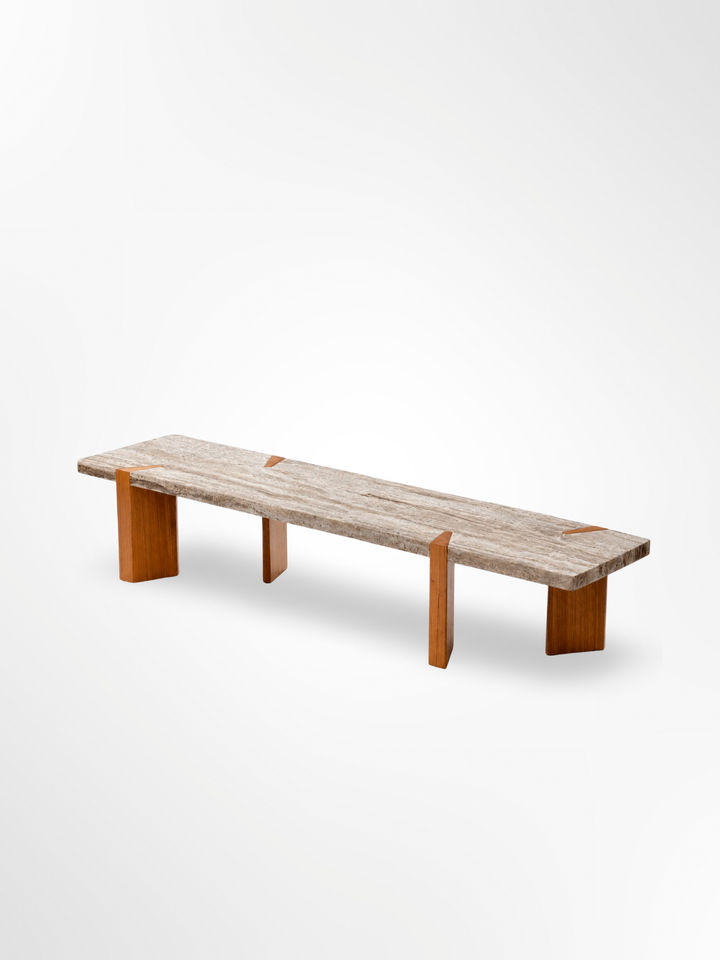
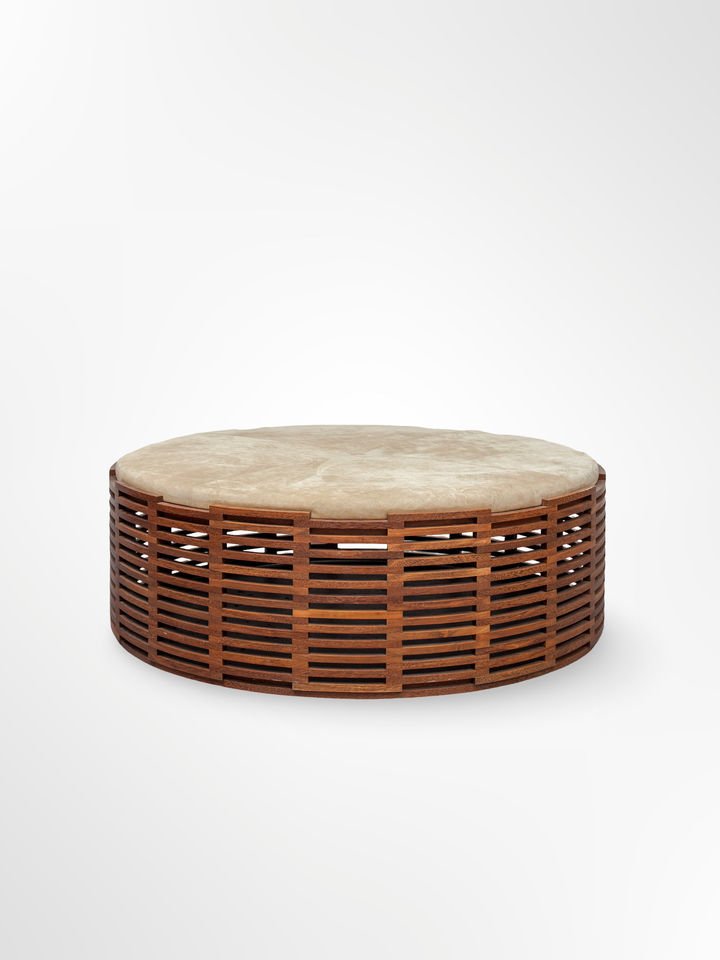
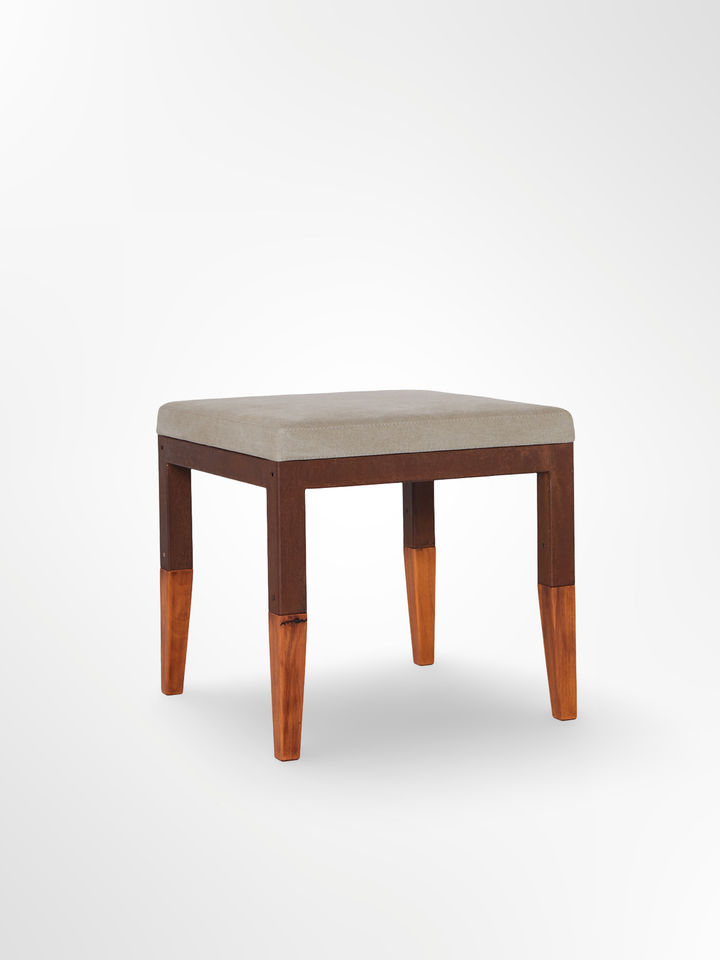
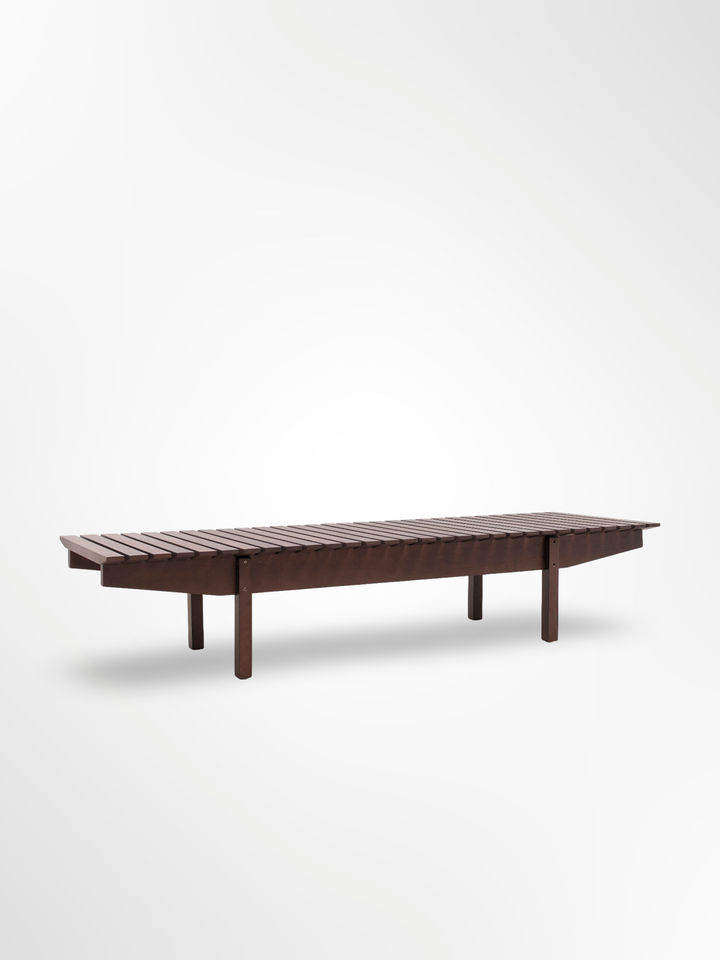
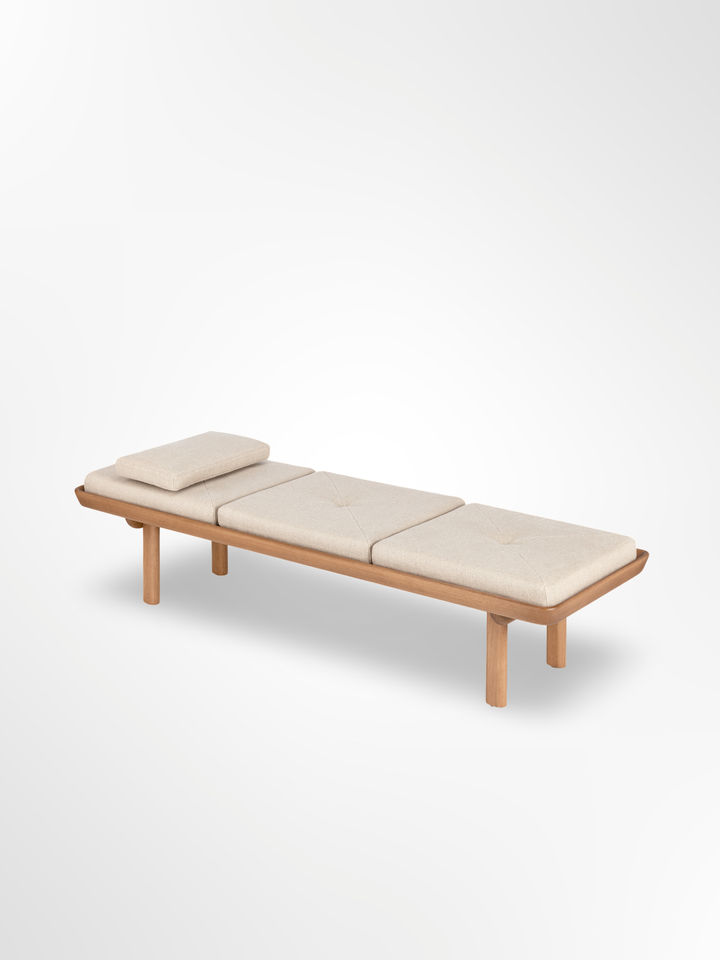
Fernando Mendes's work is the result of artisanal production, revealing an author
concerned with establishing a dialogue between tradition and modernity, between respect for time-honored construction techniques, which he masters, and the audacity of conception, which he practices by choice. "My work has always had a close connection with the practice of carpentry", he explains.
The use of joinery and the excellence of the finish are evidence of this, not to mention the work of sanding all his pieces by hand. Self-identified as a designer woodworker, or artisan, Fernando Mendes confesses: "the very practice of carpentry inspires me." Indeed, wood is not just the raw material with which he creates beauty and functionality; it is also his muse, sometimes anticipating the design, which generally comes first.
The love for a material that gave origin to the very country that it named manifests itself in the respect with which he treats it, adopting transparency as an aesthetic and imperfections, the "defects", as attributes. Also noteworthy in Mendes’ chairs, armchairs, and tables – they do not have corners, tips, or edges. Any right angles are softened by their contours and rounded shapes. It's as if he wanted to quote Oscar Niemeyer, who said: "it is not the right angle that attracts me, nor the straight line, hard, inflexible.
What attracts me is the free and sensual curve. "Also, his idea of not being the "absolute creator", but rather incorporating chance and errors into the process of elaboration, reminds us of the "millionaire contribution of all errors" by Oswald de Andrade. Not coincidentally, the piece he likes most is the beautiful "Santos Dumont Chair, "with which he wanted to "honor the inventor of the airplane and our first designer." Fernando moves forward without ceasing to look back.